Saturday, 19 July 2008

Natural Dye Inks


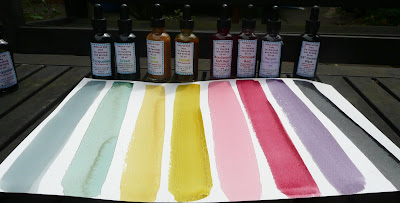
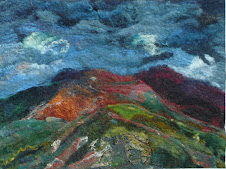
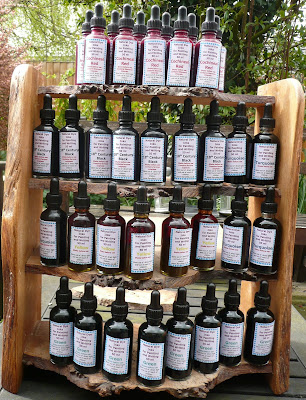
My new Natural Dye Inks which I have been developing over the last six months are now on my website for sale. These are the inks I now use for painting the covers of my dye books and also for painting the pictures that are the start of the process for creating a new landscape in naturally dyed felt, and machine stitch.

As I view the photographs above I feel frustrated as despite my best endeavours they do not show the richness and complexities of these beautiful colours.

Sunday, 13 July 2008

Dyers Chamomile Anthemis Tinctoria


Today Enys and I picked 1.7 kilos of Dyers Chamomile from her garden where it grows better than in mine-why I don't know.


Dyers Chamomile is apparently a European plant that spreads as far as the Himalayas but was not much used in Europe as weld and sawwort were considered better dyes and this probably explains why, although Dominique Cardon1 has a section on the plant pigments found in Dyers Chamomile, she does not have a section of recipes, but nor does Jill Goodwin in the Dyers manual or Su Grierson in Colour Cauldron so maybe it also was not used or does not grow in Scotland or the North of England. John and Margaret Cannon in their lovely Kew Garden book with the beautiful illustrations -by the by one of my favourite and frequently turned to dye books- mentions that Dyers Chamomile was used to dye the Turkish carpets2 although Dominique Cardon says that this was the wild chamomile . Jenny Dean in Wild Colour 3has a page for dyers chamomile and also used the plant stem and leaves to get a soft green , something I must try this year.
All those who do talk about Dyers chamomile say that it is easy to grow which it is. You can often get it in garden centres as it is very pretty plant to have in the garden. It also dries extremely well with no apparent loss of pigment in the drying process but is considered to have a poorer light fastness than weld. My own light fastness tests were done a few years ago when I kept my samples for a year in in a north facing window when there was a significant loss of colour. Now I follow a more standard procedure mentioned on Natural Dyes Online and expose to light in a southwest facing skylight for a month with a standard indigo dyed sample alongside as a control. This I need to do this year .

I have been reading about the chemicals that give the dye colours in these plants. The general group the dye pigments come under is the Flavonoids and when these are dilute they are almost colourless. It is only when the molecules are clumped together or when they are bonded to metal ions that they appear yellow. A mordant therefore not only bonds the dye molecule to the fibre but is also essential in intensifying the colour and this would explain why John and Margeret Cannon commented that wool without a mordant was almost colourless.
Like so many dye plants dyers chamomile has a number of different plant pigments, Apigenin (which was the only pigment in wild chamomile) and is also found in weld, and luteolin also found in weld. Apigenin and luteolin are flavones. I mention weld as I wondered why when dyers chamomile shares at least two of the pigments found in weld which produces one of the most light fast yellows that dyers chamomile is not as light fast. Apparently according to Dominique Cardon from whom most of this information comes, this is because minor variations in the structure of the molecule is highly significant. The other pigments , according to Margaret and John Cannon in Dye plants and Dyeing are the flavonols quercetagetin, and one I can find nothing about, patuletin. The flavonals are more light sensitive. I went into all this because I was reading a paper about growing Weld (reseda Luteola) Dyers knotweed (polygonum tinctoria) and Dyers chamomile written by Anna Hartl and Christian Vogl ( The Potential use of Organically grown Dye Plants: experiences and results on cultivation and yields of Dyers chamomile, Dyer knotweed and Weld published in the Journal of Sustainable Agriculture 23(2) 2003. Here the author said that the main components of dyers chamomile had have not yet been identified,which I found most surprising and what started me off on reading my various books.

I can understand why Dyers chamomile would be considered as a source of yellows for the organic textile trade as it is easy to grow and apparently to harvest. Think how gorgeous fields full of dyers chamomile would look too so I hope that it does happen.

In the meantime I have put 200g of flower heads into soak ready to be a demonstration for members of the WI who are to visit the garden tomorrow.

(My footnotes with the titles of the books will not transfer over- why I don't know -sometimes blogging is so frustrating!)

Wednesday, 9 July 2008

Going grey! and a school visit.

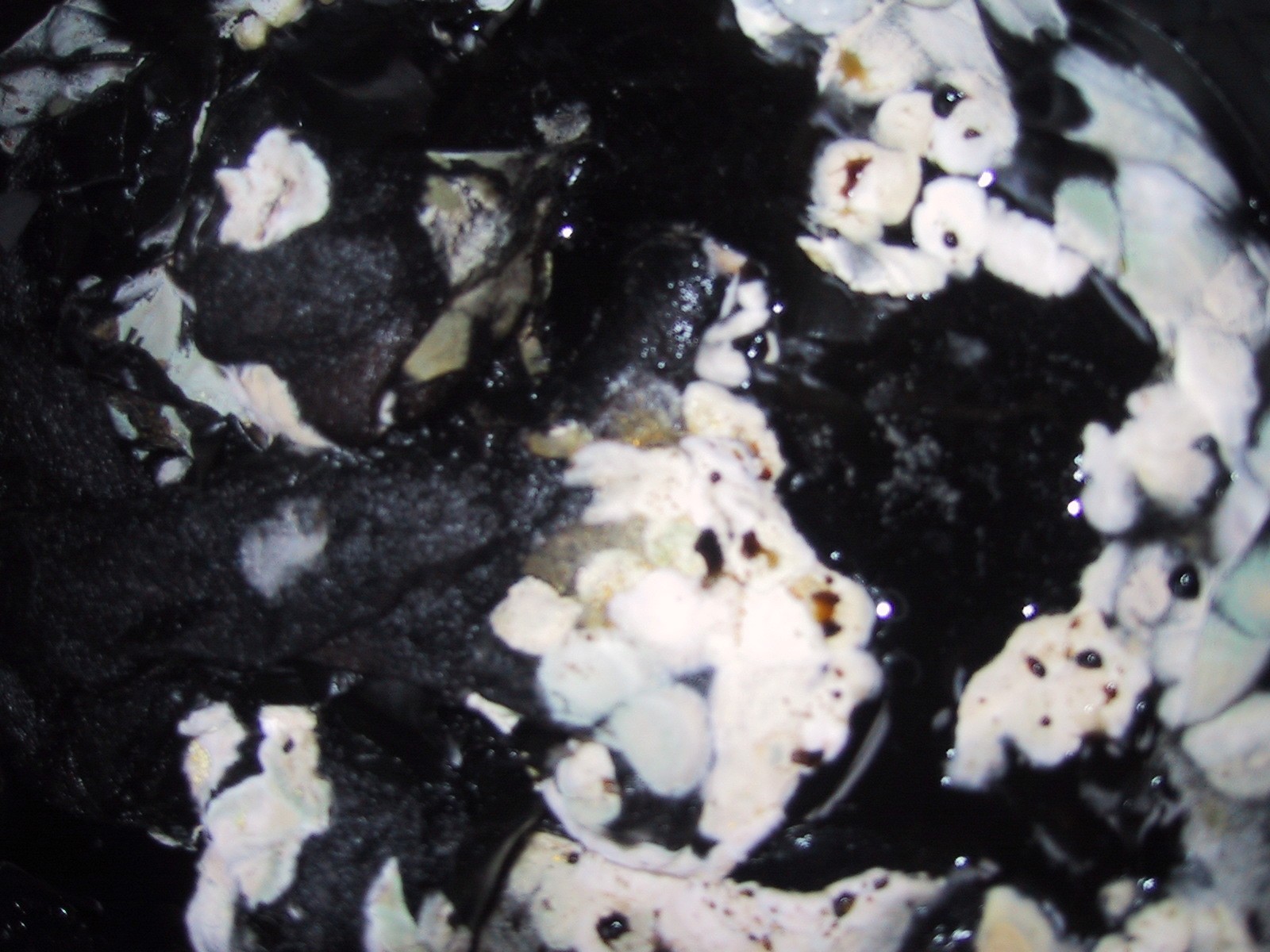
The black pot is going grey. At least the water is and the wool at the bottom is going a pale grey. Of course I realise that this was a very unscientific experiment. I should have had known weights of leaves, fibres and so on and I will do this. In the meantime WE HAVE HAD NO SUN to speak of and all my solar dyeing is looking fairly miserable-very little colour and the madder pot looks a bit on the brown side. I think we need some good hot weather-Oh I wish ! To those readingthis from parts other than the UK we have had a winter in the middle of our summer or that is what it feels like!

Today I had a visit form my local primary school , Bodfari School , with whom I did a workshop in March. We made a banner and next week I shall go to the official unveiling and hand out an Art prize. I loved having the children and showed them a few plants. We found plants that gave red, yellows ( what a surprise) blue, purple, red orange and black but no greens. When I counted them I find I had 42 different dyeplants which did include things like nettles I have to admit but still I was impressed! I had no idea I had so many. Next week the Wi are coming and following that another group. I have a good introduction planned. "This is a working and wild garden" I shall say grandly and hope that this means they will overlook the rough edges. DH has been busy and tidying stuff up but as always it needs lot of work.

Friday, 4 July 2008

Solar dyeing & black


I was getting a few pots ready today for solar dyeing and it occurred to me it might be fun put in leaves from all the tannin bearing plants and a bit of wool , add some iron and see if I could get a good black. So I picked eucalyptus leaves, purple loostrife, lythrum salicaria, and some from the staghorn sumach ,whose latin name escapes me at the moment rhus something, and put it it in my sunny spot. A couple of hours later I realised that the leaves from the staghorn sumach and lythrum salicaria leaves were all edged in black. But not the eucalpytus leaves from what I could see.

Monday, 30 June 2008

Back from woolfest 2008


Well back from the Woolfest feeling tired but happy. I had a very good Woolfest and really enjoyed myself meeting lots of interesting people and and talking a lot of dyeing talk. Enys who can be seen on the stall wearing a most amazing coat enjoyed herself too and sold loads of plants after a slightly slow start on Friday when she got into a panic and thought she would be taking them all home. This year we sold all the Japanese Polygonum (polygonum tinctoria) having sold none last year but Chinese Woad (Isatis indogitica) new this year was left behind. (Which is good news for me as I get it!) What people buy and don't buy is always a bit of a surprise. This year I sold a lot of my naturally dyed merino and quite a bit of hand painted merino 18.5 micron but almost none of my new inks. In fact the overwhelming reaction seemed to be "what are they for?"- and nobody wanted to play with them whereas at Wonderwool they received an enthusiastic response. :( I sold lots of my luxury felting packs and a few of my lovely eco brooches and bits of everything else. People looked at my solar dyed fabrics and pictures and felt stoles which I am teaching next year at the UK association of Weavers Spinners Dyers biannual summer school and made appreciative comments. I don't expect to sell pictures at something like the Woolfest, although I ahve done in the past, - I bring them more to show how I use my naturally dyed fibres. My stall is a mixture of a gallery and a shop. Sometimes I wonder whether I should choose to do one or the other?

I came back with more than a few ideas. Alison Daykin of Tinctoria Dyes was telling me of a student who has done a range of colours using extract dyes containing mordants such as oak gall, myrobalan and others ( ie high in tannin) and then overdying in the other dyes. That sounds fascianting. In the evening I also had time to read my Dominique Cardon and decided to try getting the turquoise on silk using fesh polygonum leaves. I also brought a kilo of organic merino from the mill down in Devon -Cold Harbour ( I think) . It is 19 micron and very gorgeous. This Iam going to Solar dye and aim to team up with my solar dyed fabrics. I am not sure quite where this is going yet but it is going somewhere.

Friday, 20 June 2008

Results of solar dyeing and good news about the dog.

This is a classic case of not following my own advice! I emptied this jar where the contents had been solar dyeing the other day about a month after I started it when really solar dyeing is better being left for as long a possible.
All the fibres and fabrics were premordanted. Silk caps overnight in a cold mordant of 35% alum (pottassium aluminium sulphate), the wool fibres in 8% alum, and 7% cream of tartar, the cellulose - a cotton gimp yarn I brought at Wonderwool from DT Crafts with 5% aluminium acetate. The cotton yarn was mordanted in the standard method of heating the fibres up over and hour simmer for an hour and allow to cool. The wool I heat slowly overnight. By the morning the bath is steaming but not boiling and I switch it off. I mention all this about mordanting as there has been a lot of discussion on mordanting on both Natural Dyes Online and the Online Guild of Weavers Spinner and Dyers. The latter have been running a fascinating and most interesting workshop in dyeing vegetable fibres with both natural and synthetic dyes. I would have really enjoyed doing it and in many ways I wish had but I also becoming increasingly fascinated by solar dyeing which fits alongside fermentation dyeing. and as we all know you can't assume the sun will be around-you have to seize the moment! I am also becoming increasingly convinced ( but don't have scientific evidence to back it up), that the raise over the hour, simmer for an hour allow to cool etc is the minimum and that long slow mordanting over periods of time and lower temperature result in better colours. I really need to set up a series of experiments to test this out-it would be a good one to do.

The dyes used were red cabbage, dyers camomile, coreopis tinctoria and some of my own madder. Everything was wet when I photographed it and the cotton has dried to a much paler soft colours very subtle!

ps Anyone interested in the case of my golden retriever might like to know that the Vet was extemely pleased with him on his last visit. His treatment has stabilised his condition and although he has lost a bit of weight he is enjoying life very much especially cooling his tummy in muddy puddles and having three meals a day. Formerly a G.O.D ( grumpy old dog) he is now a C.O.D ( cheerful old dog) and yesterday had two dog chews his and the one he snitched from the springer spaniel.

Tuesday, 10 June 2008

Extract and solar dyeing


I have just had a lovely session dyeing silk fabrics and silk bricks in extract dyes. This is partly in preparation for the Wool Fest and partly because I just want to make some fabric lengths in naturally dyed silk and 18.5 merino. I am not sure to what end but something inside me urges me on and I have learnt to follow these urges as they usually lead me to something exciting.
I also have a number of solar dyeing experiments going on too! I recently got India Flint's fabulous book on eco dyeing whic has got me experimenting with variations on her techniques of bundling and rolling fabrics in dyes. I have two jars layered with silk caps and yarns with dyes like red cabbage, dyers camomile ( dried from last year) chopped madder root, dyers coreopsis black violas and some of the maize which gives purple. The jars alternate between the hot plates in the studio when it is cold and solar dyeing when like today it is warm and sunny. They have been on the go for about two weeks, the jar in the top picture is just a couple of days after starting and the picture of the two jars was taken today. I notice that the bottom of one jar looks quite pink, but I don't know what is giving that. The colours are deepening but not as such as I expected, I wonder whether it is because there is a lot of silk there which is quite dense. One of the jars contains 2 metres of silk chiffon crushed into the top. Lying flat on the slate is the one that looks the least interesting but shows signs of being the most exciting as it 2 metres of satin chiffon layered with red cabbage, madder roots, black violas and dyers camomile and more. I dyed a lot with red cabbage leaves when I came back from Colour Congress in 2002 and experimented with this technique of crushing dyes into fabrics and found that red cabbage gives blue which dyed like this appear to have a good lightfastness at least the fabrics I did 6 yrears ago show no sign of fading although I have not done precise lightfastnss tests. Over the last few weeks I have been trampling the pack and now the silk shows areas of a deep deep blue going to turquoise. I feel very excited about this but once it is washed and steamed ironed to fix the colors in they may not be so vibrant as they seem at the moment . It is hard to wait though!
Right at the back in a demijohn is some wool solar dyeing in madder and looking very red.
Incidentally for anyone reading this who has limited space this is a brilliant way to dye. A sunny balcony or windowsill is all you need as the silk is mordanted cold. ( Wet out the silk overnight make up a solution of alum as 35% dry weight of silk in alum, dissove in hot water, add to a bucket of water,stir, add the silk and leave for 12 hours. hey presto done). I found this recipe in Dominique Cardons book Natural Dyes. Then you could wrap the silk in red cabbage leaves, onion skins , eucalpytus leaves- India.Flint says that you can get e.cinerea from florists.

I decided to do some workshops in these techniques too as I am enjoying myself so much and I want to earn some money too, so I am having three ; one on Solar Dyeing and bundling fabrics with dyes on July 12th, one on extract dyeing on July 26th and one on dyeing the blues using the chinese woad, japanese polygonum, and woad as well as indigo on August 23rd so if anyone is interested all the info is on the website.
In the meantime I have lost something. I buried a metre of mordanted muslin in my compost heap ready to show S4C, now I can't find it. Any ideas on how to hunt for some missing fabric!