Show all posts
The producers want to know how good the cochineal is so I volunteered to try it out. Recently I have been experimenting with different ways to dye cochineal. I have tried extracting the colour from the whole bugs by boiling in distilled water but in the end I reverted back to the way I have been doing it for a while which I found originally in Trudy Von Stralen's book "Indigo Madder and Marigold". ( Still one of the best introductions to natural dyeing around I think) . For me with soft water this seems to give me the best colour, but if you have hard water you might want to use distilled to extract the dye as cochineal does not like hard water.
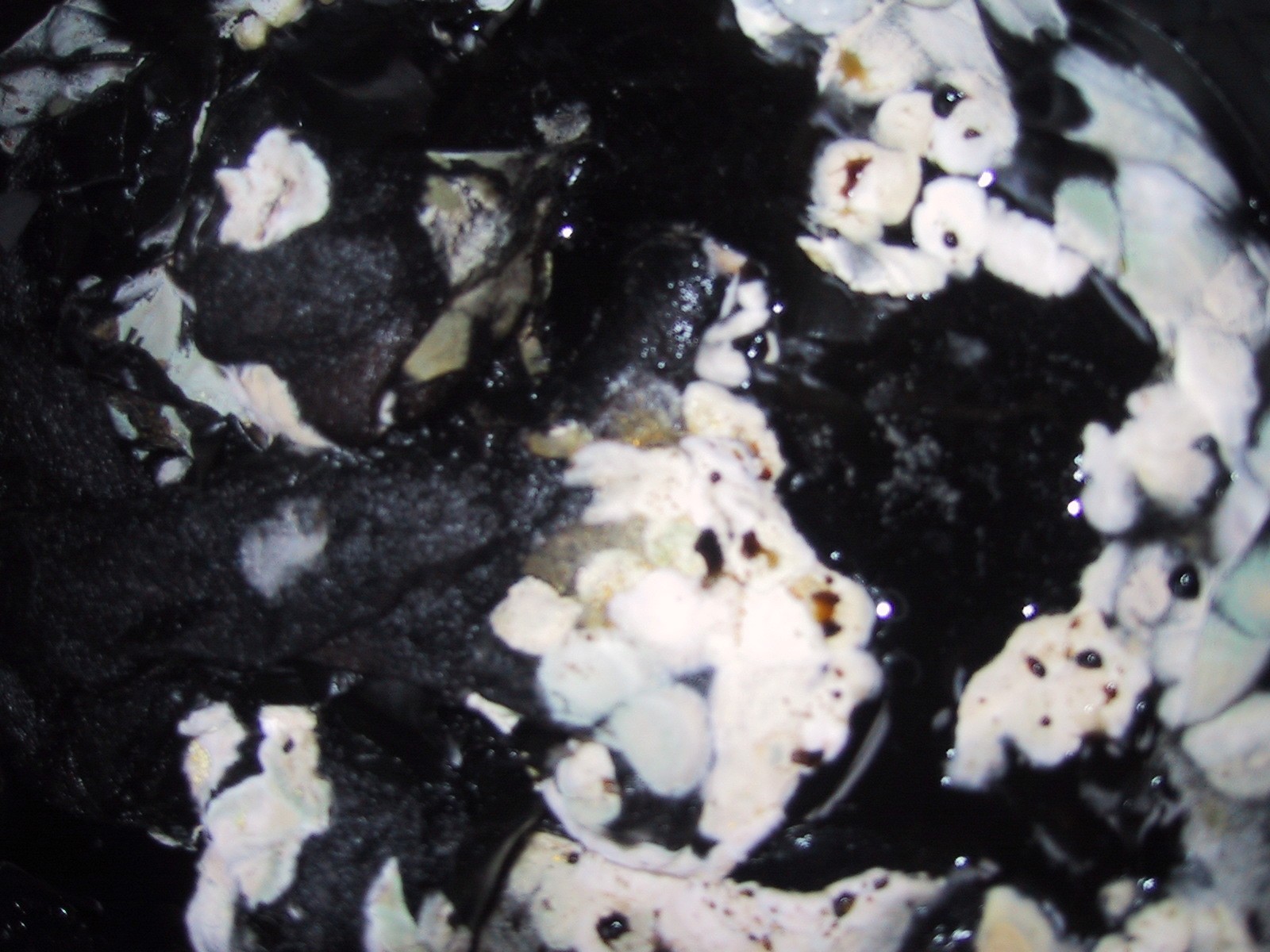
So I ground 50g of cochineal bugs in a coffee grinder kept for that purpose. Trudy Von Stralen says to grind it till it is like flour and I do grind it several times. The photo looks quite gritty and grainy but in fact the fine

 powder has clumped a bit.
I put the ground cochineal into soak with a teaspoon of cream of tartar and left it to soak for 24 hours. Then I heated it- I used an electric casserole on the low heat so it takes about four hours to come to the boil and then boiled for about an hour and left to cool overnight.
At the same time I soaked my fibres overnight before mordanting them in 12% alum and 5% cream of tartar. (For more information on mordanting look here.)
I added a 170g of 23 micron South African Merino tops , the fibre I use in my felting and for many of my workshops. This I heated on low till it simmered and let it simmer for about an hour. Both of the South American Dyes, cochineal and log wood, are the exception to my rule of low temperature dyeing as they fix better if simmered. The fibres were then cooled rinsed and dried. I used up the exhaust dyeing more merino, a 100g of tussah silk and teeswater. Altogether the 50g of cochineal dyed 970g of fibre paler and paler colours The first colour as you can see
 from the comparison photo was as good as my usual cochineal.
 It will be really good to have cochineal from a nearby and known source and with a lower carbon foot print too for us in Europe. I know that cochineal production gives an income to poor Peruvian farmers but I do like to know where my dyes come from and whether workers have been paid well for their labour too.
I still have 50 g left so now I plan to play around with the mordants such as iron and oxalic acid. Cochineal is polychromatic and responds to different mordants givng purples grey and pinks. The best book for this is Fred Gerber's self published classic booklet Cochineal. A mine of information but very hard to get hold of.
I have just been given this link to the Association Milana