Show all posts
 Posted by Helen
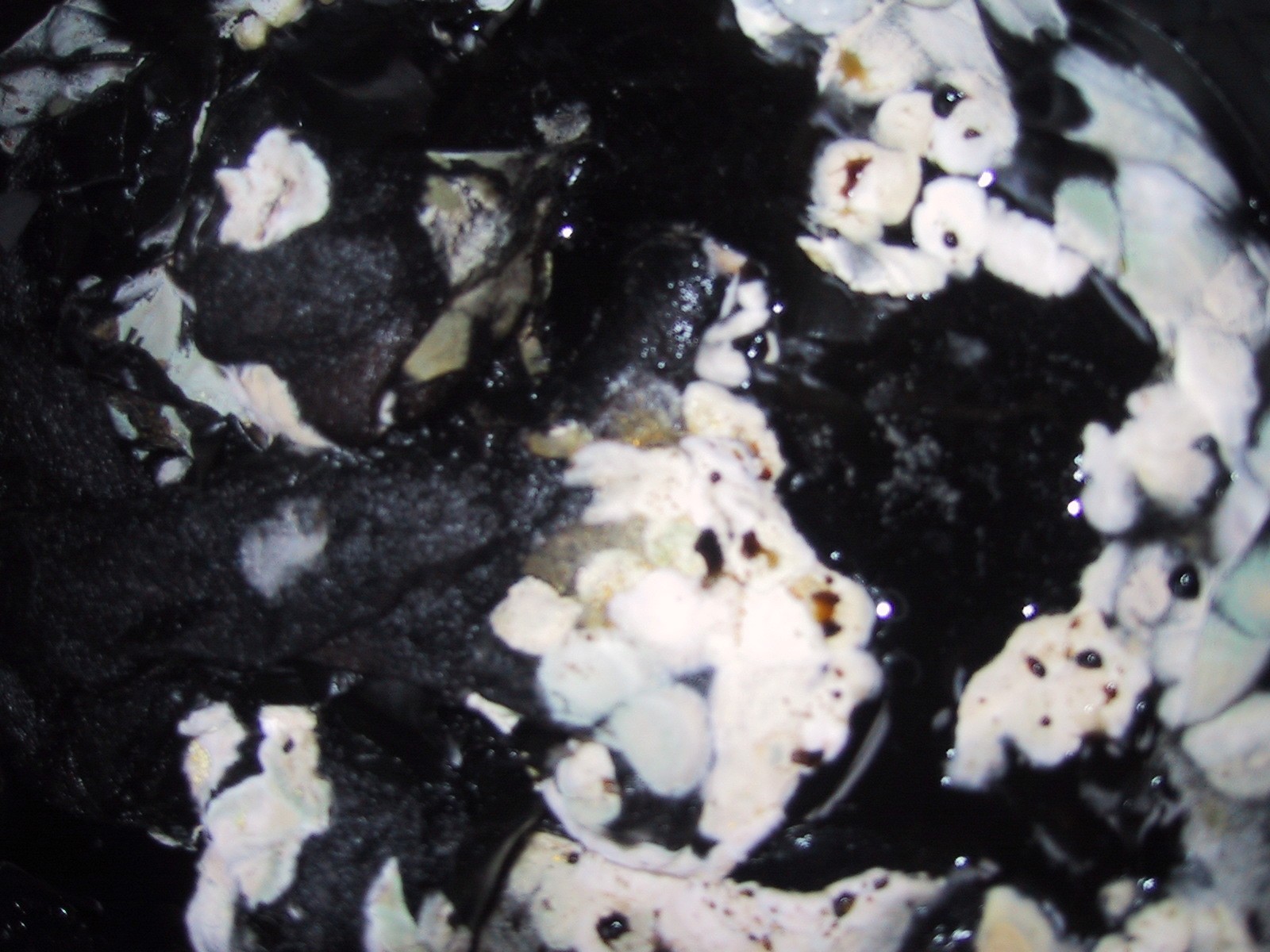
 I don't often manage to do the workshops run on the UK Online Guild of Weavers Spinners and Dyers although when I do I always really enjoy them. However this month Debbie Bamford of the Mulberry Dyer is running one entitled Dyeing the Reds. Debbie came to the very first dyeing workshop I ever ran in 1995 and I think has been dyeing ever since. She now has a successful business and does a lot with the re-enactors market and over the years has built up a huge knowledge in the history of dyes, historical recipes and specialises in, amongst other things, dyeing linen threads. Now it is my turn to sit at her feet and learn. We started off with dyeing lac.This I have not done since went to my very first workshop twenty or so years ago when my memory was of a number of us pounding away at the sticky resinous coating to get the red dye and it always seemed too much hard work. Sticklac ,the crude form of lac was also very hard to get. Recently however I have used the lac extracts sold by both Tinctoria Dyes and Earthues (sold incidentally by the Mulberry Dyer) and loved them being slightly redder than cochineal.
Both lac and cochineal belong to the insect dye group, lac having a range between Tibet and China to Burma Siam and India. ( Gerber, Cochineal and the Insect Dyes). According to Cardon there are 13 different lac insects of the Genus Kerria but the common Indian Lac insect Kerria Lacca is still used on large scale, not for the red dye but for the shellac. Kerria Chinensis gives the best red dye (Cardon) The resin of lac is collected from twigs on which the insects grows shaping the resin to the twigs, and this it is called sticklac. After the dye has been removed the resulting shellac may be melted and dropped forming buttons (button lac) or poured out into thin sheets when it is shellac)
If you want to know how I extracted the dye following Debs recipe you will have to join the Uk OnlineGuildof WSD and join the workshops!
I found a 100g of sticklac I had bought from Fibrecrafts about 5 years ago lying at the bottom of my stash and I used this to extract the dye putting 100g of fibres in the dye bath. Reading more about it in Gerbers excellent little book I find that the dye contents is very low 1/2%-3/4% of 1% of the dry weight of the raw material.
I put cashmere and silk,camel and tussah silk, a handful of teeswater curls and two carrier rods in the bath. The camel and tussah silk came out very blotchy with the camel taking up very little dye and that has gone back to be over painted with more dyes. The teeswater curls is the reddest as you can see. it is probably better to dye just one type of fibres in the dyebath as one always seems to grab more dye than the rest.
I loved it however and as soon as I can get some more sticklac from Debbie I will dye more
Dominique Cardon Natural Dyes Archetype Publications isbn 978-1-904982-00-5
Frederick H Gerber Ccochineal and theInsect Dyes published by the author isbn 09601814-3-1
ps Debbie has a new blog A History of Colour